
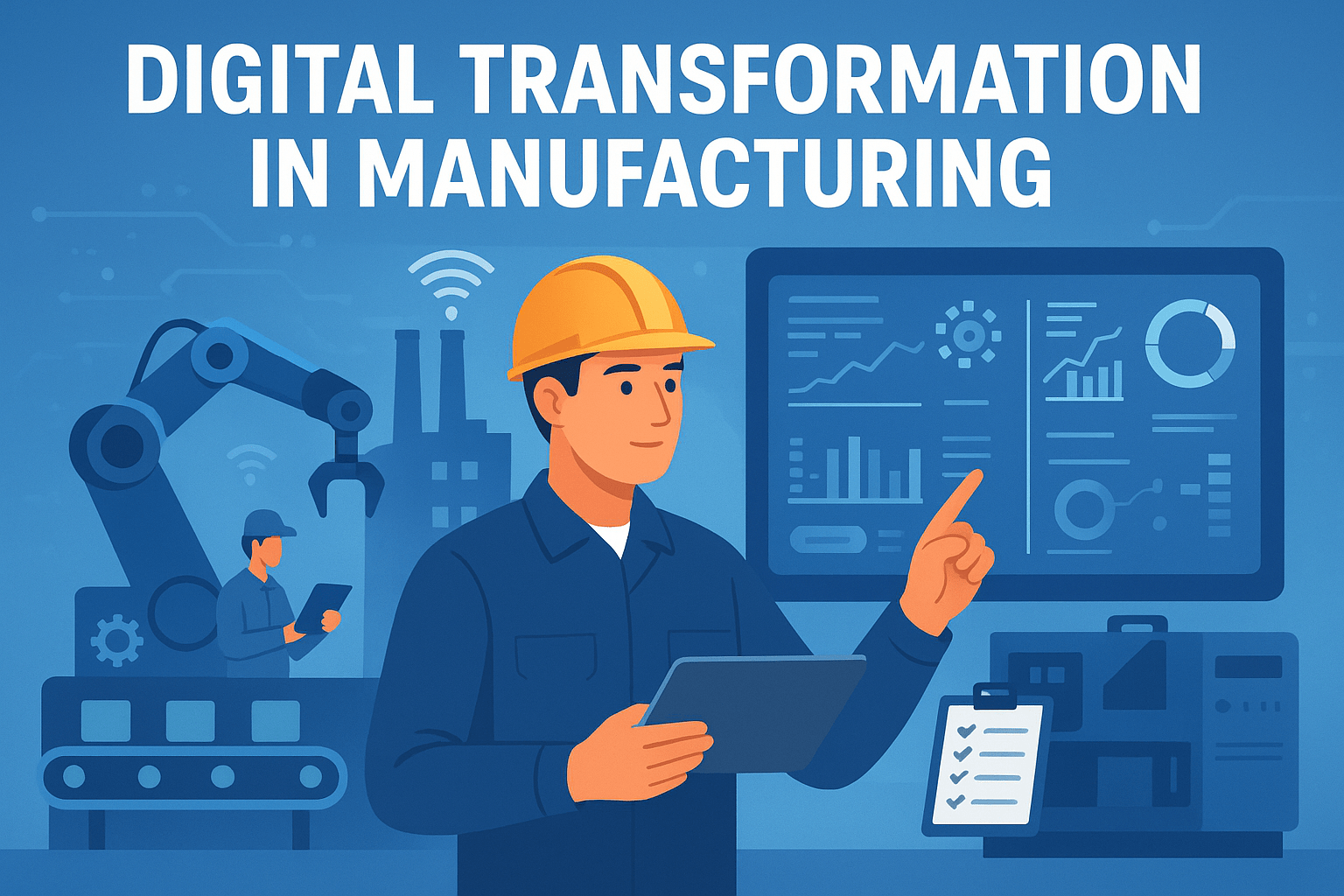
The manufacturing sector is undergoing a radical shift. Once dominated by manual processes and siloed systems, today’s factories are increasingly digital-first, leveraging automation, real-time data, and connected systems. This evolution, commonly referred to as digital transformation in manufacturing, is no longer optional. It is the key to staying competitive in a fast-changing, globalized economy.
But what exactly does digital transformation mean for manufacturing companies, and how can businesses adopt it effectively? Let’s break it down.
What Digital Transformation in Manufacturing Means
At its core, digital transformation in manufacturing is the integration of advanced technologies across the production lifecycle to improve efficiency, traceability, and decision-making. It connects machines, people, and processes, creating a data-driven ecosystem where insights can be harnessed in real time.
Unlike basic automation, digital transformation goes deeper—it’s not just about replacing manual tasks with machines, but about creating intelligent, adaptive, and connected operations.
Some of its fundamental pillars include:
- Automation & Smart Controls – moving beyond simple mechanization to intelligent automation with AI and robotics.
- Data Integration – bringing together OT (Operational Technology) and IT systems for unified insights.
- Connectivity – ensuring seamless communication between shop floor and enterprise systems.
- Analytics & Insights – leveraging AI, machine learning, and IoT data for predictive, faster decision-making.
Key Areas of Digital Transformation in Manufacturing
Digital transformation touches nearly every aspect of a plant. Here are the most impactful areas where manufacturers are adopting change:
1. Paperless Operations
Paper-based logs, batch records, and quality checklists are inefficient and error-prone. By adopting e-logbooks, digital batch records, and mobile inspection apps, manufacturers can:
- Eliminate duplicate data entry
- Reduce human error in compliance reporting
- Ensure data is securely stored and easily retrievable for audits
This shift not only streamlines daily operations but also supports sustainability goals by reducing paper waste.
2. SCADA & IIoT Integration
Supervisory Control and Data Acquisition (SCADA) systems and Industrial Internet of Things (IIoT) devices form the backbone of real-time monitoring.
By integrating SCADA with IoT sensors and analytics dashboards, plants gain:
- Real-time visibility of machine performance, temperature, pressure, and energy consumption
- Predictive maintenance insights to reduce downtime
- Centralized dashboards for plant managers to monitor KPIs across multiple sites
This creates a connected, transparent plant environment where problems are detected and resolved proactively.
3. Smart Automation
Traditional automation improves efficiency, but smart automation takes it further with AI-driven intelligence. By analyzing Overall Equipment Effectiveness (OEE), energy data, and process metrics, AI can:
- Identify bottlenecks in production
- Optimize energy usage for cost savings
- Provide recommendations for process improvements
The result is a more agile and adaptive plant that continuously learns and improves.
4. Connected ERP/MES Systems
One of the biggest challenges manufacturers face is the disconnect between shop floor activities and enterprise systems like ERP (Enterprise Resource Planning) and MES (Manufacturing Execution Systems).
With connected ERP/MES, organizations can:
- Sync production data with inventory, procurement, and finance in real time
- Improve planning accuracy through live shop floor feedback
- Enhance collaboration across departments by breaking down silos
This ensures decision-makers have a single source of truth for operations, from raw materials to final product delivery.
Benefits of Digital Transformation in Manufacturing
The tangible impact of digital transformation can be seen across multiple dimensions:
- 30–50% faster decision-making – thanks to real-time analytics and centralized dashboards
- 60% reduction in manual errors – by replacing paper-based processes with digital tools
- End-to-end traceability – every batch, operator action, and machine parameter can be tracked for audits and compliance
- Remote visibility and asset control – enabling managers to monitor and adjust production even when offsite
- Improved compliance – with automated record-keeping and error-free documentation
Ultimately, digital transformation enhances operational efficiency, quality control, and customer trust, while also making businesses more resilient in dynamic markets.
Real-World Example: From a Single Line to Enterprise-Wide Transformation
The beauty of digital transformation is its scalability. Manufacturers don’t need to digitize everything at once. Many start with:
- A single production line equipped with IoT sensors
- A dashboard for real-time OEE monitoring
- A mobile app for quality checks
From there, organizations gradually scale to enterprise-wide systems—connecting MES with ERP, integrating SCADA with analytics, and automating complex workflows across multiple plants.
Companies like ICS deliver end-to-end digital transformation solutions, offering everything from OT upgrades and plant monitoring to enterprise dashboards. Whether it’s modernizing a single line or connecting global operations, the focus is on digitizing what matters most to the business.
Challenges and Considerations in Digital Transformation
While the benefits are compelling, manufacturers should be aware of the potential challenges:
- Change Management – Employees must be trained and aligned with new digital tools.
- Data Security – As plants become connected, cybersecurity risks rise. Strong ICS/OT security frameworks are essential.
- Integration Complexity – Legacy systems may not easily integrate with modern technologies. A phased approach helps manage risk.
- Initial Investment – While ROI is strong, upfront investments in hardware, software, and training must be planned carefully.
Overcoming these challenges requires a clear digital transformation roadmap, strong leadership, and choosing the right technology partners.
The Future of Manufacturing is Digital
Manufacturers who embrace digital transformation are positioning themselves as smart factories of the future. From real-time visibility to AI-driven automation, digital technologies are helping organizations cut costs, improve compliance, and accelerate growth.
In today’s hyper-competitive environment, standing still is not an option. Digital transformation is not just about efficiency—it’s about building resilient, future-ready manufacturing ecosystems.
Final Thoughts
Digital transformation in manufacturing is more than a technology shift; it’s a cultural and operational revolution. By adopting paperless operations, IIoT-enabled monitoring, smart automation, and connected ERP/MES systems, companies can achieve:
- Faster, data-driven decisions
- Fewer errors and compliance risks
- Greater visibility and control across operations
Whether you’re a small manufacturer starting your digital journey or a global enterprise scaling smart factories, the path forward is clear: digitize what matters, scale what works, and build for the future.